
Top-rated independent heating and cooling across California's Central Valley and the Sierra foothills
The House Feels Clammy Even With the AC Running
The thermostat says 74 but the house still feels sticky. Your skin never quite dries, the air smells a little heavy, and windows fog in the morning. The AC is running, sometimes running a lot, and it is still clammy. That usually means the system is cooling the air without pulling enough moisture out of it, and that has a handful of common causes.
Call (888) 381-2953- A real person answers
- Open 7 days
- Written quote before work starts
Taking calls until 5:00 PM PT
By our service team · vetted by the techs who do this daily
What Clammy Air Actually Tells You
An air conditioner removes humidity as a side effect of cooling. Warm indoor air passes over a cold evaporator coil, water condenses on that coil, and it drains away. If the house feels damp at a temperature that used to feel fine, the coil is either not staying cold enough, not seeing air across it long enough, or the moisture is being added faster than the system can remove it. Short cycling is the classic version: the system satisfies the thermostat in a few minutes, shuts off, and never runs long enough to wring water out of the air. Long clammy runs point somewhere else, usually airflow or charge.
The Cheap Causes First
Start with the things that cost nothing. A loaded filter starves the coil of air, and in areas with heavy ag dust and cottonwood a filter can plug in weeks rather than months. Closed or blocked supply vents do the same thing room by room. A thermostat set to FAN ON instead of AUTO keeps the blower pushing air over a wet coil between cooling cycles, which re-evaporates the condensate and blows the humidity right back into the house. That single setting fixes a surprising number of clammy houses. Also check whether a bath fan or dryer vent is dumping moist air where it should not be.
Airflow, Ductwork and the Attic Problem
Across California and Nevada a lot of homes run attic package units and attic ductwork, and that duct sits in air that can hit well over 130 degrees in summer. A disconnected duct boot or a crushed flex run pulls hot, humid attic air straight into the return side. The system then spends its capacity cooling the attic instead of your rooms, and the humidity never comes down. Leaky returns in a crawl space do the same thing from below. Sagging duct, torn insulation and a return that whistles are all worth mentioning when you call. This family of problems is common and often repairable without touching the equipment itself.
Charge, Coil and Sizing
If filters and vents are clean and the ducts are sound, the next layer is the refrigeration side. Low refrigerant charge raises coil temperature, and a coil that is not cold enough condenses very little water. A coil packed with dust and pet hair does the same thing from the air side. A system that is oversized for the house cools fast, shuts off fast, and never dehumidifies, which is why a bigger unit is not a fix for a clammy house. None of this is homeowner territory. Refrigerant is under pressure and the equipment carries high voltage, so leave the panels closed and call for air conditioning repair.
Safe Checks, Then What We Do Differently
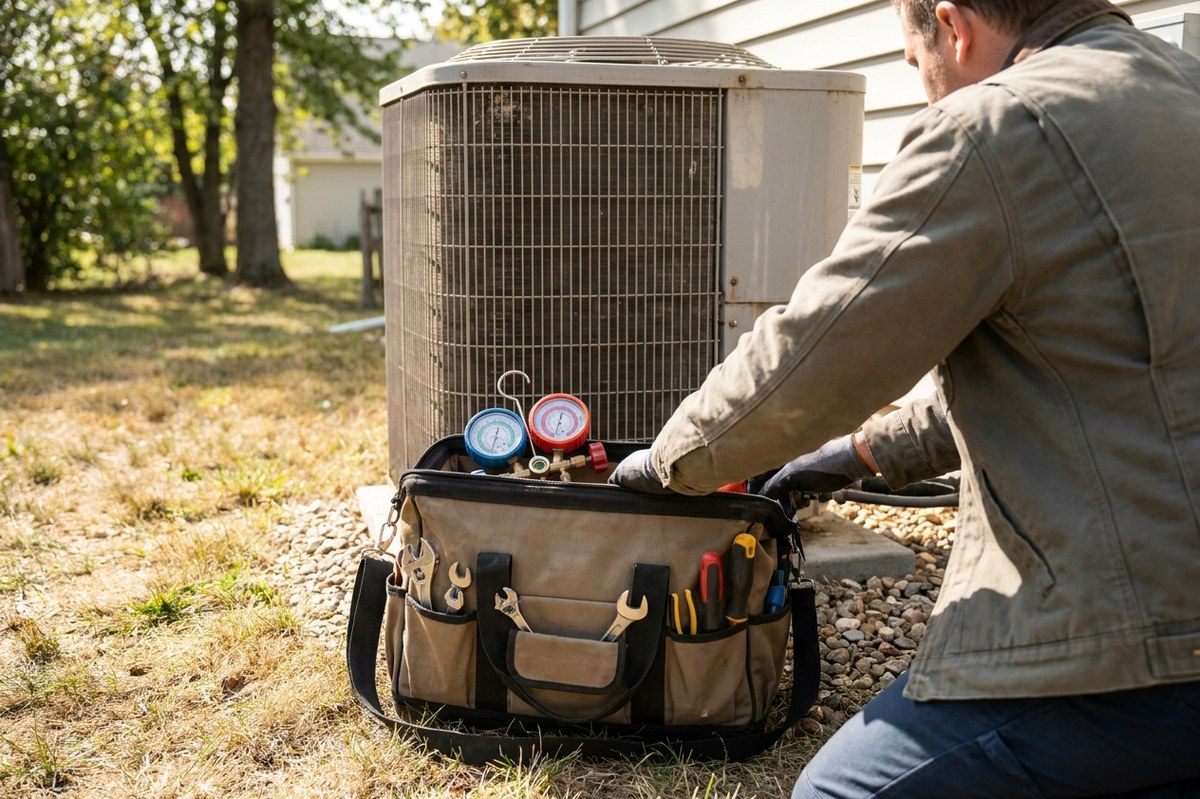
What you can safely do: replace the filter, set the thermostat fan to AUTO, check the batteries, confirm supply and return vents are open and not blocked by furniture, and clear weeds, leaves and cottonwood away from the outdoor unit so it can breathe. Stop there. When we arrive for AC repair we measure instead of guess. We take temperature split across the coil, static pressure across the system to find hidden airflow restriction, and indoor humidity at more than one point. We inspect the drain pan and condensate line, check the coil face, and read pressures to judge charge. Then we tell you which of those causes it actually is.
When Clammy Turns Into Something Else
Call us sooner if you see standing water near the indoor unit, a ceiling stain under an attic unit, or musty smell that gets stronger when the blower starts. A plugged condensate line backs water up into the pan, and in an attic install that water goes into drywall. Ice on the refrigerant line is another one to report rather than chip off, since it usually means airflow or charge trouble. If you ever smell gas near a furnace, leave the house first, call 911 or your gas utility from outside, then call us for heating repair once the utility clears it.
The House Feels Clammy Even With the AC Running — straight answers
Will turning the thermostat lower fix the humidity?
Usually not. Lowering the setpoint makes the house cold and still damp, because the problem is how long the system runs and how cold the coil gets. Fix airflow, the fan setting, or the charge instead.
Should I run a dehumidifier?
A portable unit can take the edge off one room while you wait for service, and it is safe to use. It does not address a plugged filter, leaking attic duct or low refrigerant charge, so treat it as a stopgap.
Why is my house clammier after I replaced the AC?
Often the new system is oversized for the home or the existing ductwork. It cools quickly, shuts off before it can pull moisture out, and leaves the air sticky. Airflow measurement will confirm it.
How it works
- Step 1
Tell us the symptom
Call or fill in the quote form. We ask what changed, when it started, and what the thermostat reads. That tells us whether to bring parts for a cooling fault or a heating fault.
- Step 2
We diagnose on site
A technician checks the thermostat, the electrical side, airflow through the filter and coil, refrigerant pressures, and the outdoor unit. You get told what failed and why, in plain words, before anything is replaced.
- Step 3
Repair and verify
We make the repair, then run the system and measure the results at the vents. If a part needs ordering, we say so and give you a realistic window instead of a vague promise.
- A real person answers
- Open 7 days
- Written quote before work starts
Why homeowners call us
- Built for real valley heatWe work in areas where afternoons sit above 110 degrees and systems run for months without a break. That shapes how we size repairs, check capacitors and contactors, and judge whether a compressor is genuinely done.
- Attic and package unitsPlenty of homes across the region run attic air handlers or rooftop package units instead of a garage furnace and a side-yard condenser. We are used to the access, the duct runs, and the drain issues those setups bring.
- Dust and debris we expectAg dust, cottonwood fluff and grass clippings pack condenser coils and starve a system of airflow. We clean what we find and show you the difference, rather than adding refrigerant to a unit that just could not breathe.
- Heating too, not only ACFurnace repair, heat pump faults and no-heat calls get the same attention as summer work. Ignition problems, cracked or failing components and short cycling all get diagnosed before we recommend anything larger.
- All major brands, gas & electricFrom Carrier and Trane to Lennox, Goodman, Rheem and Bryant, serviced independently.
- Straight answersWhen a replacement beats a repair, we tell you, sometimes before we roll a truck.
About this guide
Past the safe checks, it's a job for tools and a meter
Tell us what you tried and what it did. The booking itself takes a minute.
- A real person answers
- Open 7 days
- Written quotes
- All major brands
- Gas & electric
Rather not call? Get a free quote →